
 FR
FR
 EN
EN
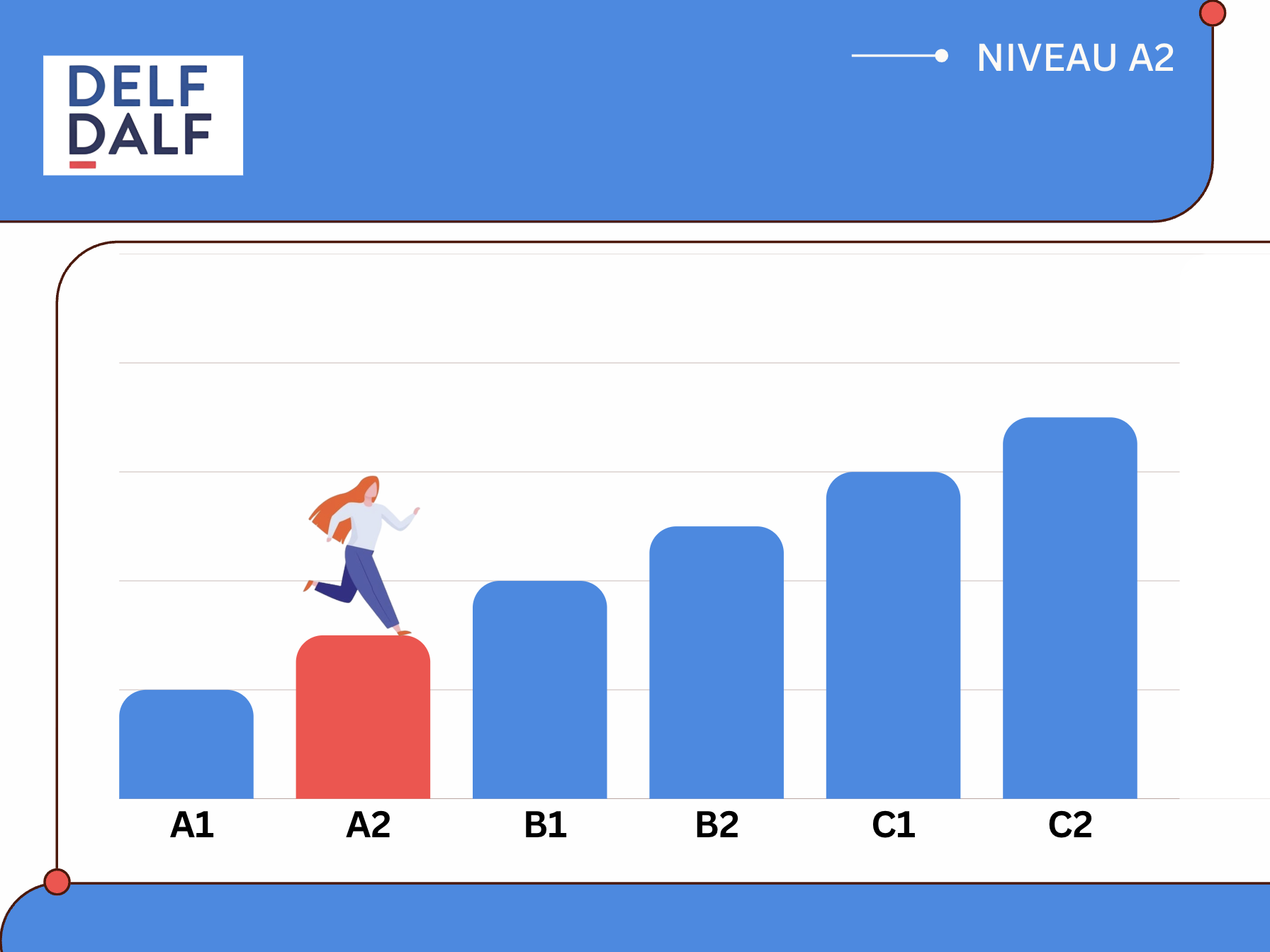
This guide provides a summary of information on the following topics:
1. Important information for exam day
2. Structure and duration of the exam
3. Listening comprehension test
4. Reading comprehension test
5. Written production test
6. Oral production test
7. Registration for DELF exams
8. Tips for each exercise
Important Information for Exam Day
At the beginning of the test, candidates must correctly complete their personal information on their answer sheet and follow the writing instructions.
- Write the candidate number, last name, and first name in the spaces provided.
- Use only a blue or black ink pen.
- Write clearly and legibly.
- Respect the required word count in written production exercises.
- Count the number of words.
Use of Draft Paper
- Candidates must not bring their own draft paper.
- Invigilators will provide draft paper at the beginning of the exam so that candidates can write keywords and their ideas.
- If necessary, candidates may request additional sheets from the invigilators.
- Draft paper must remain in the exam room and cannot be taken at the end of the test.
- All draft papers must be returned to the invigilators.
Structure and duration of the exam
The DELF A2 consists of 4 parts.
Each part is scored out of 25 points, for a total of 100 points.
To pass the exam, the candidate must:
-
obtain at least 50 points out of 100.
-
obtain at least 5 points out of 25 in each part.
The tests
1. Listening comprehension — 25 minutes
2. Reading comprehension — 30 minutes
3. Written production — 45 minutes
4. Oral production — 6 to 8 minutes + 10 minutes of preparation
The first three tests are group parts.
The oral test is individual.
The total duration of the group tests is 1 hour and 40 minutes.
Listening Comprehension Test
For this test, it is recommended to:
- Read the instructions and questions carefully before listening.
- Identify important information during the first listening:
- the topic of the conversation
- the people who are speaking
- places or dates
- the language register (“tu” or “vous”).
- The questions generally follow the order of the audio document.
- If a word is not understood, it is recommended to focus on the overall meaning of the message.
- During the second listening, candidates can check or complete their answers.
Multiple Choice Questions (MCQ)
- Candidates must tick or circle the chosen answer.
- If a candidate wants to change an answer, they must clearly circle the new answer to indicate their final choice.
Reading Comprehension Test
During this test:
- Read the instructions and questions carefully before answering.
- Identify the essential elements of the document:
- type of text
- author
- recipient
- purpose of the document.
- The questions follow the order of the text.
- For True / False questions, candidates must justify their answer by copying a sentence from the document.
- It is possible to use draft paper to organize ideas.
Written Production Test
This test evaluates the candidate’s ability to write a simple text, such as a friendly letter or a message.
Advice:
- Read the instructions carefully and identify the topic.
- Use draft paper to organize ideas before writing.
- Write simple and short sentences.
- Use simple connectors: and, but, because.
- Reread the text to check spelling and grammar.
How to Count Words
A word is a group of characters separated by a space.
Examples:
- “Je mange un croissant” = 4 words
- “J'ai fait des exercices de français” = 6 words (“j’ai” = 1 word)
- “Rendez-vous” = 1 word
Exercise 1
In this exercise, the candidate may:
- express impressions or opinions
- use positive or negative adjectives
- use verbs expressing feelings: aimer (to like), adorer (to love), détester (to hate)
To talk about a past experience:
- use the passé composé to describe an action
- use the imparfait to describe a situation.
Exercise 2
The candidate must identify the type of text requested:
- postcard
- message
It is recommended to use:
- a greeting formula (Dear…, Madame, Monsieur)
- a polite closing formula at the end of the message.
Oral Production Test
What Happens on Exam Day
Here are the steps the candidate follows on the day of the oral exam.
1. Arrival at the Exam Center
The candidate arrives at the exam center at the time indicated on their invitation.
At reception:
- they present their exam invitation and ID;
- the center staff checks their identity and candidate number.
2. Candidate Call
An invigilator or examiner calls the candidate by name or candidate number.
The candidate is then taken to the preparation room.
3. Preparation of Topics
In the preparation room, the candidate:
- Draws two topics for Part 2 (extended monologue).
- Reads the two topics and chooses the one they prefer.
Then:
3. Draws two topics for Part 3 (interaction).
4. Chooses the preferred topic.
The candidate then has 10 minutes of preparation in total.
During preparation:
- invigilators provide draft paper;
- the candidate may write keywords and ideas;
- it is recommended not to write full sentences;
- the candidate must not write on the question sheet.
4. Speaking in Front of the Examiners
After preparation, the candidate is invited into the exam room.
The test lasts about 6 to 8 minutes and includes three parts.
If a word is missing, the candidate can explain using other words.
If the candidate does not understand the examiner, they can say:
- “Excuse me, I don’t understand.”
- “Could you repeat, please?”
- “Could you speak more slowly?”
Part 1: Guided Interview
The examiner asks simple questions about:
- the candidate’s identity
- family
- daily activities
- tastes and hobbies.
The examiner may also ask the candidate to talk about:
- a past experience
- future plans.
Part 2: Extended Monologue
The candidate chooses one topic from two options.
They must:
- present a person, activity, or event
- answer the questions given in the topic.
During preparation, it is recommended to write keywords rather than full sentences.
After the presentation, the examiner may ask additional questions.
Part 3: Interaction
The candidate participates in a role-play with the examiner.
Examples of situations:
- asking for information
- organizing an activity
- solving a daily life problem.
During preparation, the candidate must identify:
- their role
- the examiner’s role
- the goal of the situation.
It is recommended to use appropriate polite expressions:
- “Hello” / “Hi”
- “Thank you”
- “Goodbye”
The pronoun “tu” is used in informal situations, while “vous” is used in formal situations.
DELF Exam Registration
For information about exam sessions and registration procedures, visit:
Tips for Each Exercise
Click the link below to see a sample exercise with practical tips:
👉 https://www.france-education-international.fr/diplome/delf-tout-public/niveau-a2/entrainement